

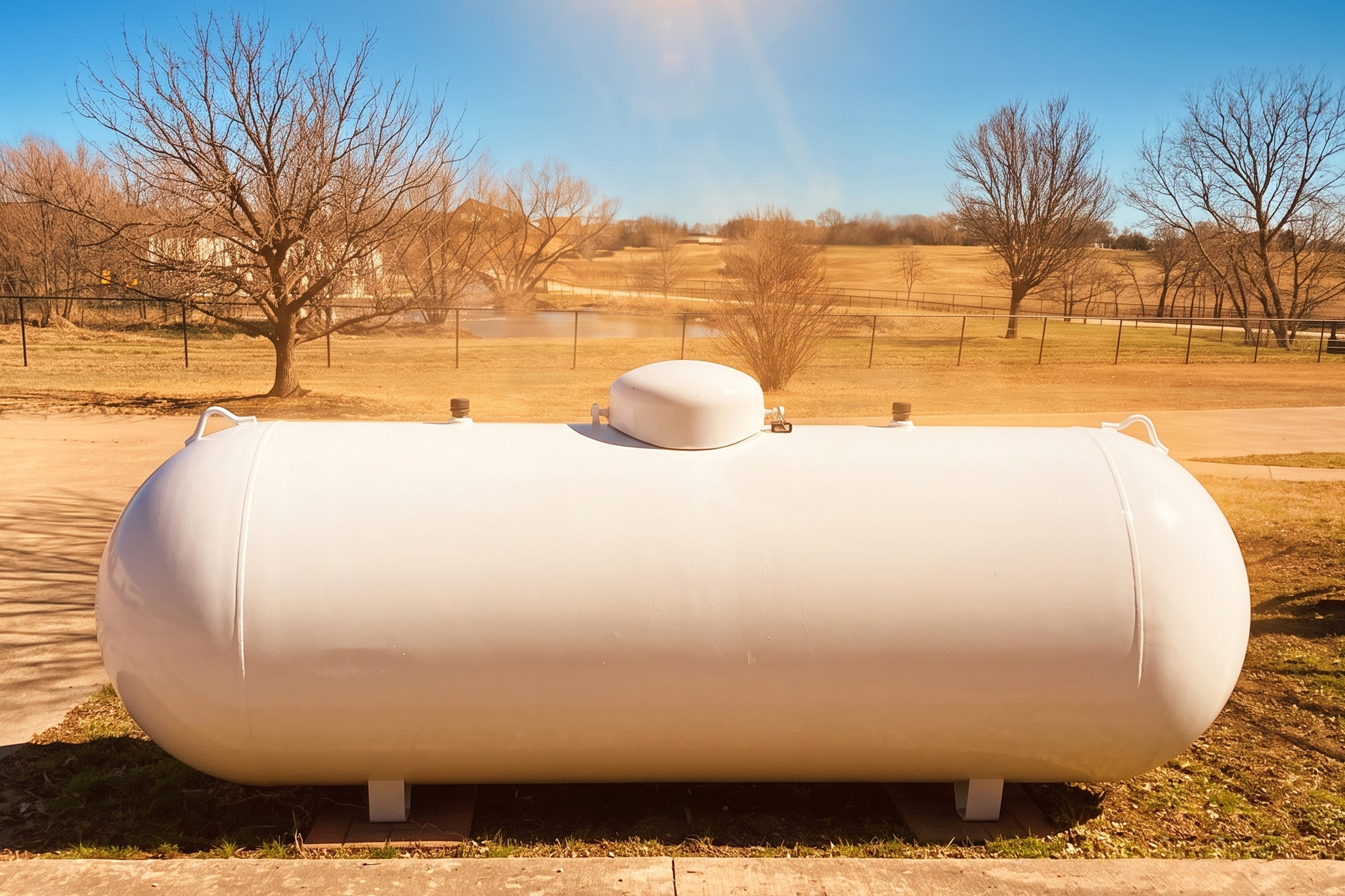
Summer Safety Guide: How Heat Affects LPG and Propane Storage Tanks
The Physics of Heat and LPG Vapor Pressure
LPG stored as a liquid in a sealed pressure vessel exerts vapor pressure against the vessel walls and that pressure rises directly with temperature. For propane: at 70°F vapor pressure is approximately 124 psi; at 100°F it rises to roughly 196 psi; at 120°F it reaches approximately 256 psi. These are not theoretical numbers they are real operating conditions that summer heat creates every year at facilities across the U.S. Sun Belt, Gulf Coast, and Latin America.
ASME Design Accounts for Heat But Operators Must Too
TRIARC Tank manufactures all pressure vessels to ASME Section VIII Division 1 and Division 2 standards, with design pressures that incorporate expected temperature extremes for the vessel’s intended deployment region. The pressure relief valves on ASME-certified vessels are sized to handle thermal overpressure events. However, ASME design does not replace operator responsibility for safe fill levels, PRV maintenance, and heat-mitigation practices.
The 80% Fill Rule: Why It Exists and Why It Matters More in Summer
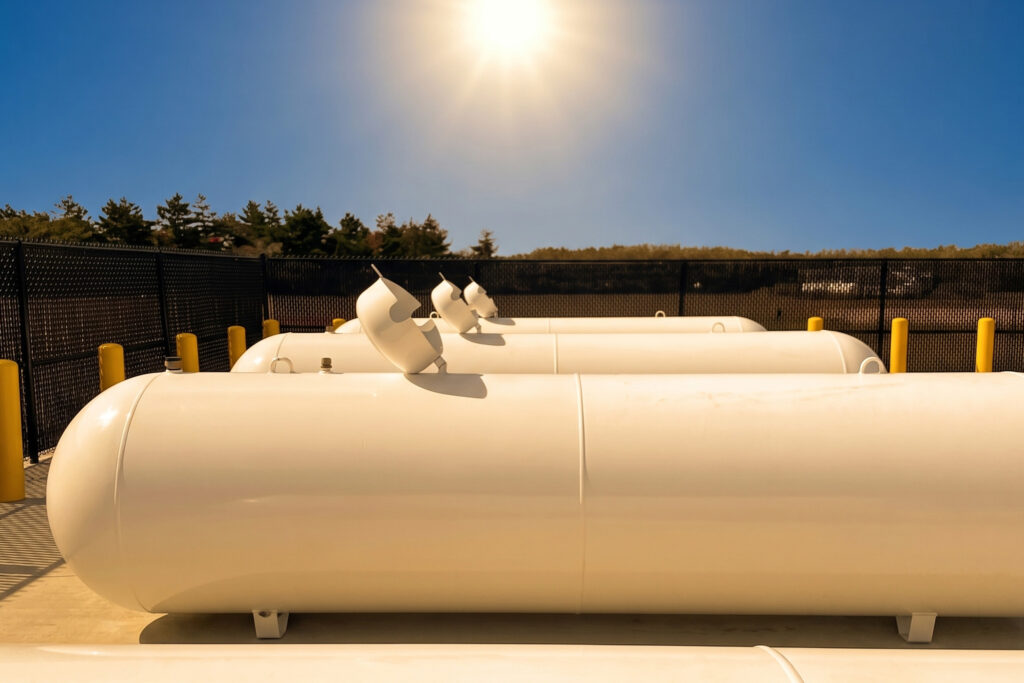
NFPA 58 and industry standards limit above-ground LPG tank fills to 80% of water capacity leaving 20% vapor space for thermal expansion. In summer heat, this vapor space absorbs the volume increase of the warming liquid. An overfilled above-ground tank in 110°F Texas summer heat has no room for thermal expansion and will force its pressure relief valve open or, in extreme cases, stress the vessel beyond its safe operating range.
Note: underground tanks operate under different fill and thermal dynamics and should be managed per their specific installation requirements.
TRIARC Tank recommends strict adherence to the 80% fill rule for above-ground vessels year-round, with additional caution during summer fills when the ambient temperature at delivery time is significantly lower than the peak temperature the tank will reach before the next delivery.
Pressure Relief Valve Inspection Before Summer
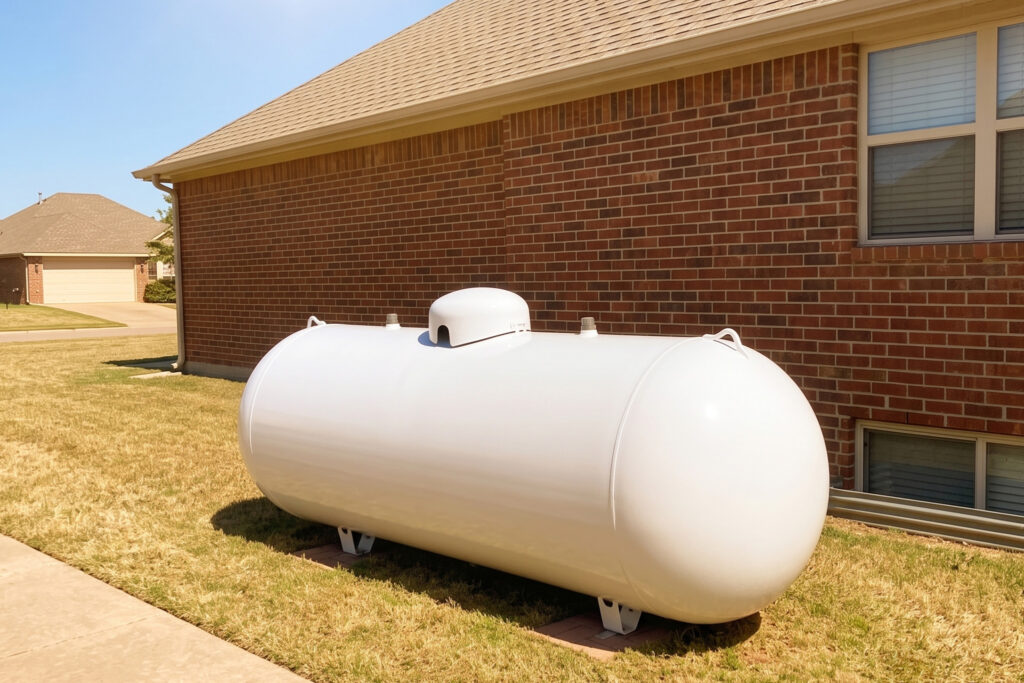
PRVs are the last line of defense against overpressure. A PRV that is corroded, fouled with residue, or has never been exercised may fail to open at the correct set pressure or may fail to reseat after opening. Annual PRV inspection and replacement on schedule is an industry best practice, strongly recommended by NBIC guidelines for pressure relief device maintenance. TRIARC Tank vessels are shipped with manufacturer-specified PRV recommendations; replacement units must match the original pressure rating and ASME certification.
Shading and Ventilation for Above-Ground Summer Storage
Surface temperature reduction through shading can meaningfully lower vapor pressure in above-ground tanks. Tanks positioned in direct sun in desert or subtropical climates can reach surface temperatures well above ambient air temperature. Properly designed shade structures avoiding coverage of the relief valve and ventilated to allow air circulation reduce solar gain without trapping radiant heat. TRIARC Tank’s engineering team can advise on shading configurations for specific vessel geometries and installation sites.
CO2 and Cryogenic Vessels: Additional Summer Considerations
Refrigerated CO2 storage and other cryogenic vessels face increased heat ingress through insulation during summer months, raising boil-off rates and refrigeration system demand. Insulation integrity particularly on vessels using foam-panel systems should be inspected before the hottest season to identify any panels that have experienced moisture ingress or mechanical damage that degrades their insulating value.
TRIARC Tank: Built for North America’s Harshest Operating Environments
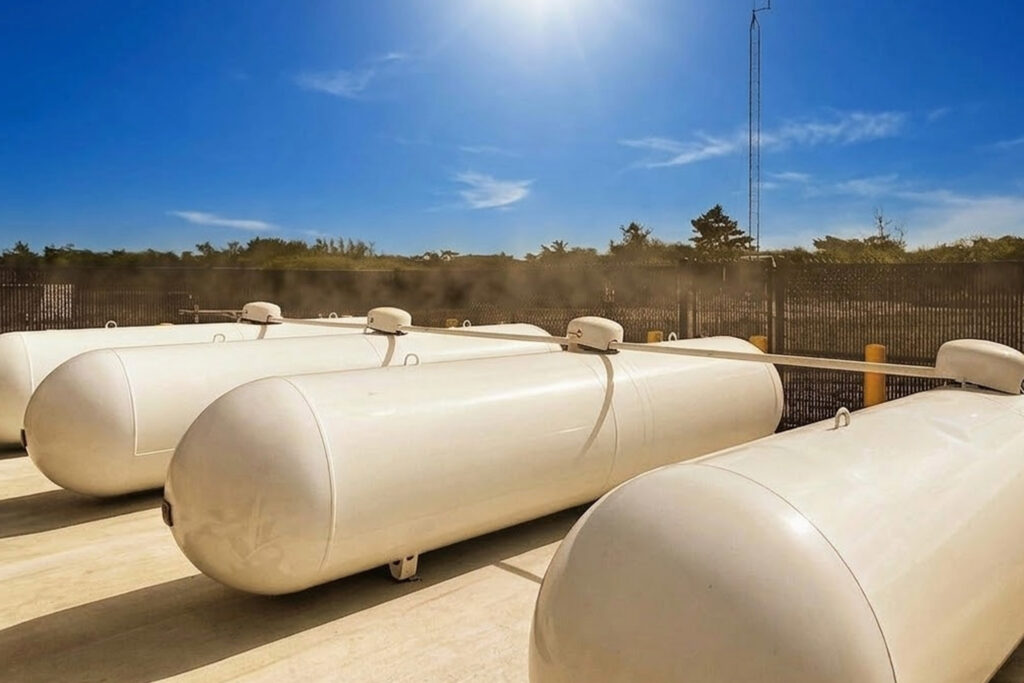
From our manufacturing facilities in Mexico where every vessel is built using American steel sourced across North and South America to Rocky Mountain installations and Gulf Coast terminals, TRIARC Tank designs and builds pressure vessels for the full spectrum of North American operating conditions. Every vessel is engineered with the climate of its intended deployment region as a core design parameter.
Ready to elevate your pressure vessel solutions? Contact TRIARC Tank today.
Visit triarctank.com | triarccorp.com | tatsa.com.mx