

Fall Agricultural Readiness: Preparing Your Ammonia and Propane Storage for Peak Season
Fall stacks three demands into the same few weeks: ammonia application opens when soil temperature drops below 50 °F, grain drying pulls hard on propane systems at harvest, and heating season follows right behind. Equipment checks belong in August and capacity decisions in September. TRIARC Tank, the largest tank manufacturer in the Americas, builds and delivers to that calendar every year.
Why Does Fall Punish the Unprepared?
Mostly because none of fall’s deadlines are negotiable. Soil temperature opens the ammonia window and freeze-up closes it. Harvest decides the drying schedule. The first cold snap starts heating season whether anyone is ready for it or not.
So a transfer hose that fails in late October fails at the worst possible moment. The requalification shops are booked solid by then, supplier yards have been picked through, and the delivery slot you suddenly need went to somebody who called in July. The same hose replaced in August is a routine line item and a calm afternoon. That difference, multiplied across everything on a plant that can wear out, is the whole case for doing this work early.
| Month | Ammonia side | Propane side |
| August | Full equipment inspection: valves, hoses, gauges, relief dates; order replacement vessels | Verify drying-season storage capacity and flow rates; order vessels and parts |
| September | Repairs complete; nurse tank paper current; staff refreshers | PRVs and regulators serviced; bulk deliveries scheduled ahead of harvest |
| October | Application season: operate, don’t repair | Drying season: operate, don’t repair |
What Does the Ammonia Checklist Cover?
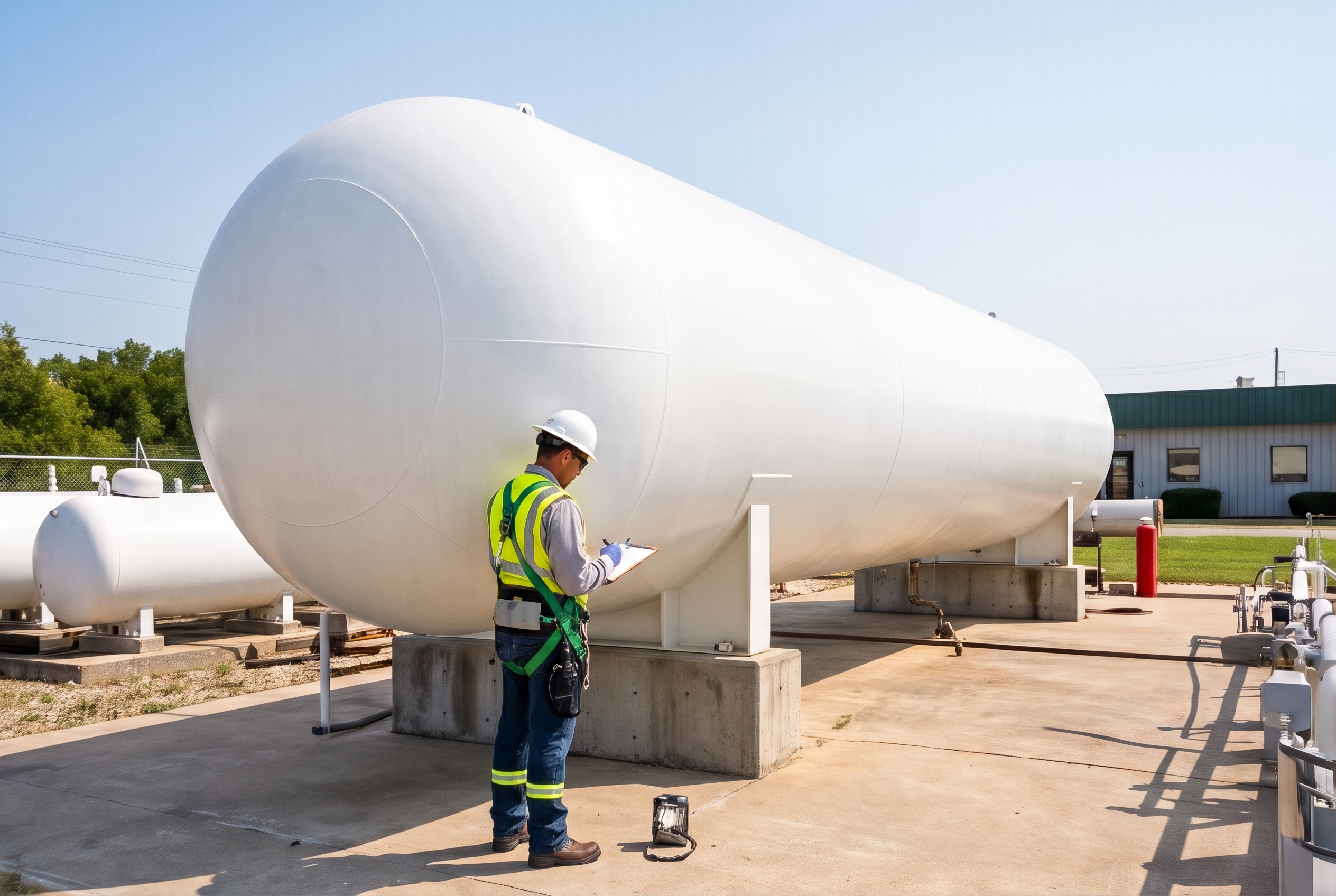
Anything that touches product, starting with the valves. Operate each one rather than just looking at it — a valve that hasn’t moved since spring has had all summer to stiffen up, and the field is a bad place to learn that it did. Hoses deserve the closest look on the list: cracking, abrasion, fitting damage, the NH3 rating, and the replacement dates. Gauges should read true. Excess-flow valves should actually trip. Relief valves need to be in date, and the fresh-water supply that G-2.1 practice calls for should be stocked, with staff who remember what it’s for.
Then there’s the paperwork. Vessel certifications and inspection records should match what your state expects before anyone official asks. Finding a gap in September is an errand. Finding it while an inspector stands in the yard in October is a different kind of day.
Is the Propane System Ready for Drying Season?
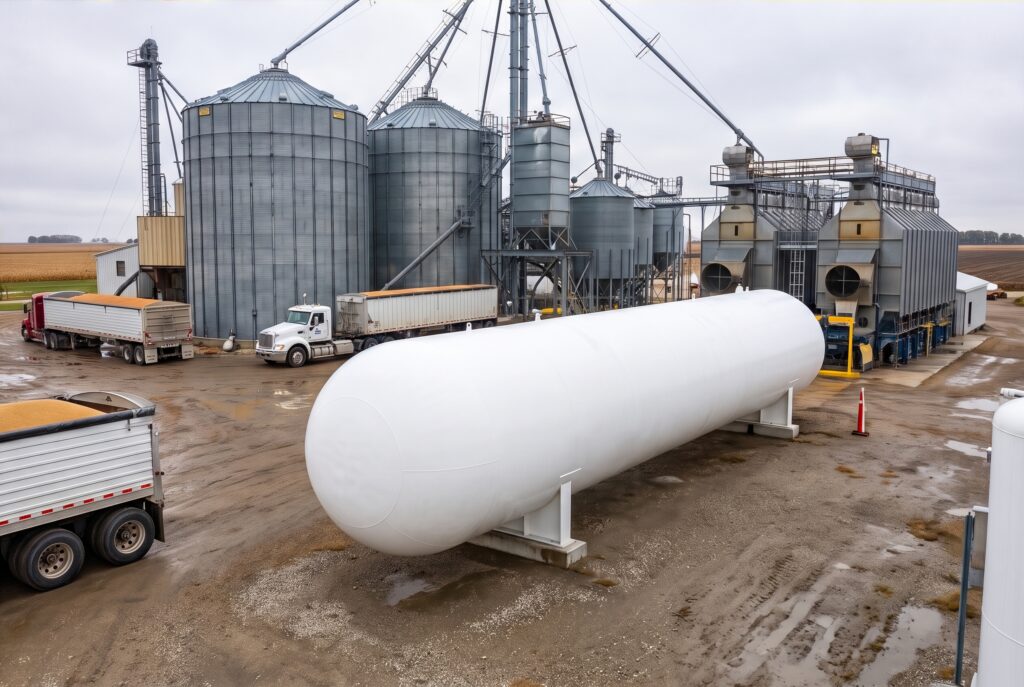
Grain drying is the hardest thing most propane systems do all year — big, sustained, simultaneous draws that will find an undersized component in the first week. Three checks cover most of it. Capacity: enough stored gallons to ride out delivery gaps at peak burn, which is as much a bulk storage question as a scheduling one. Flow: vaporization and regulation sized for several dryers running at once, not for what the system saw in July. Condition: relief valves and regulators serviced now, while a service call is still routine.
Marketers with drying accounts should walk those customers’ systems in August too, with the same attention they’d give their own plant. When an account runs short of flow capacity mid-harvest, the dryer rarely gets the blame.
What Should Be Replaced Before Winter, Not During It?
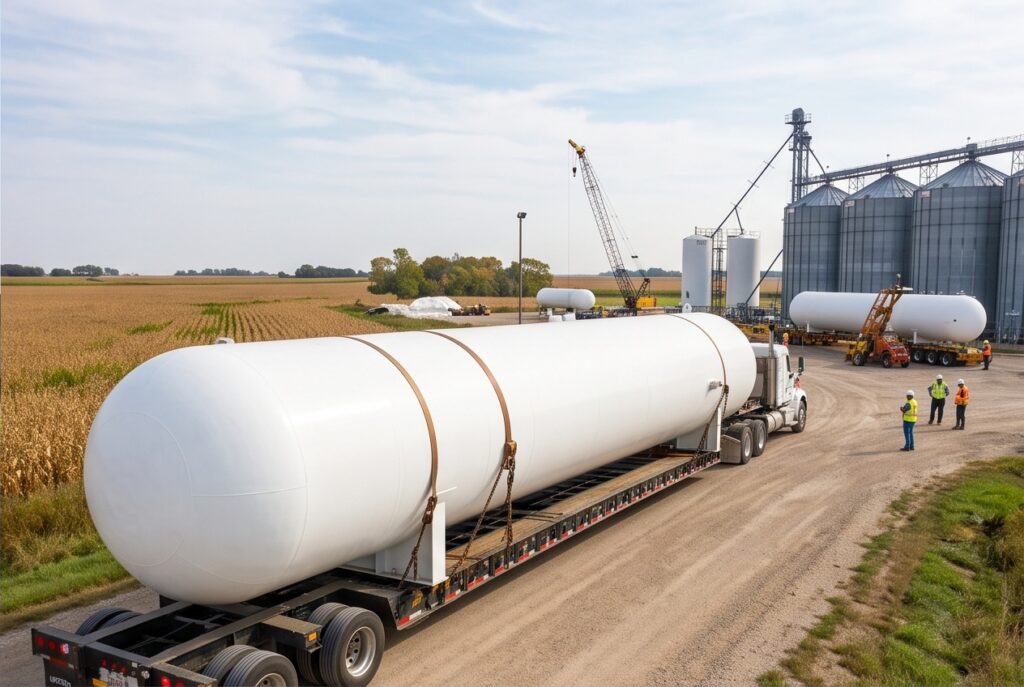
Replace anything winter is likely to finish off. Vessels with thin readings at the supports. Valve trains running past their dates. Equipment whose MDMT never really matched the winters your territory gets. If something has been on the watch list all season, this is the month to deal with it — a vessel replaced in September is a scheduled delivery from pre-positioned inventory, and the same vessel replaced in January is an emergency with winter freight on top.
On timing: order fall-service vessels by early summer when you can, and winter-heating capacity by early fall at the latest. The distribution network exists to deliver ahead of the season. It works better that way for everybody.
FAQ
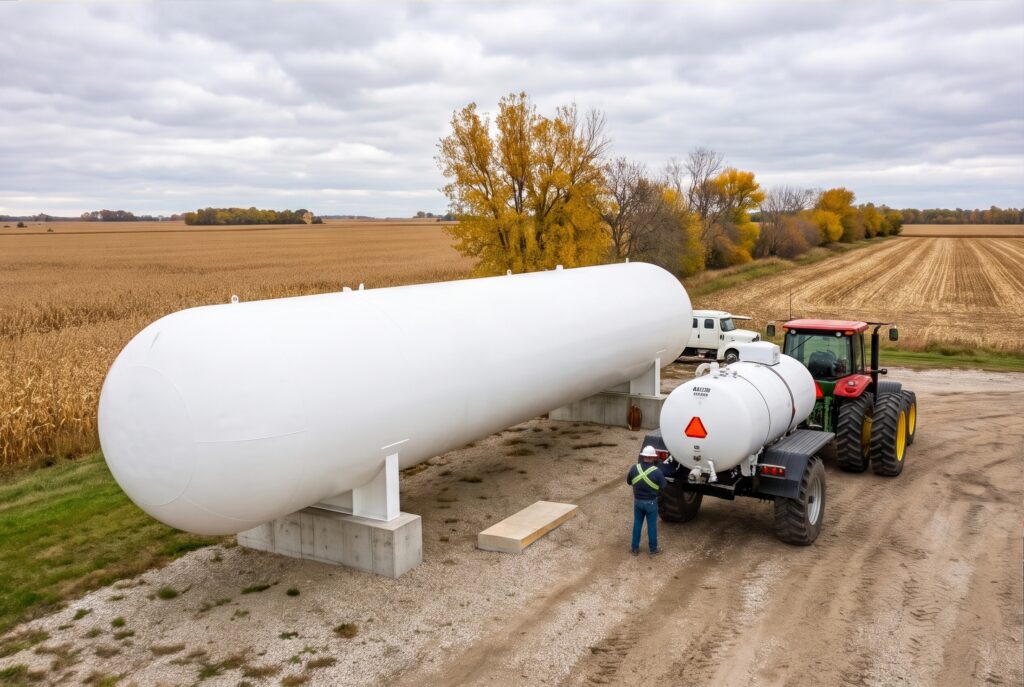
When does fall ammonia application start? Once soil temperature falls below 50 °F, which is what stabilizes the nitrogen. The window runs to freeze-up, and it rewards equipment that was ready before it opened.
What’s the most common propane readiness gap for drying season? Vaporization and flow. Storage volume gets all the attention, but delivery rate at sustained peak burn is what actually fails.
When should replacement vessels be ordered? Early summer for fall service. Early fall, at the latest, for winter heating capacity.
What does nurse tank compliance rest on? ASME construction at 250 psig minimum, G-2.1 practice, documented inspection cycles, and paperwork that holds up in an audit.
Pre-season vessel orders, delivered before the window opens: call 888-558-8529 or start at triarctank.com.