

Types of Steel Used in ASME Pressure Vessels: A Complete Material Guide
Why Steel Selection Is the Foundation of Pressure Vessel Safety
Every pressure vessel begins as a specification a set of operating conditions, pressures, temperatures, and regulatory requirements that dictate exactly what material can be used. At TRIARC Tank, our relationship with steel is foundational.
Our vessels are manufactured in Mexico using U.S.-sourced steel plate giving our customers the material quality, ASME mill traceability, and compliance confidence of American steel combined with the manufacturing excellence of our Mexican facilities. Nearly a century of manufacturing ASME-certified vessels for LPG, propane, anhydrous ammonia, and bulk industrial gas storage has given us unmatched insight into material performance across real-world applications.
Carbon Steel: The Industry Standard for Pressure Vessel Construction
The majority of TRIARC Tank’s pressure vessels are fabricated from carbon steel plate conforming to ASME-approved specifications, primarily SA-516 Grade 70. This material is favored for its combination of tensile strength, toughness at low temperatures, and excellent weldability all critical properties for pressure vessel fabrication under ASME Section VIII Division 1 and Division 2.
SA-516 Gr. 70 is specifically engineered for moderate- and lower-temperature service in pressure vessels. It’s fine-grain practice and normalized condition to give it superior notch toughness, making it appropriate for vessels deployed in cold-climate agricultural and industrial applications.
Normalized Steel: Refined Grain Structure for Maximum Toughness
Normalization is a heat treatment process in which steel is heated above its critical temperature and then allowed to cool in still air. The result is a refined, uniform grain structure that improves toughness, ductility, and impact resistance all properties critical for pressure vessels operating under cyclical loading or in low-temperature environments.
TRIARC Tank specifies normalized steel plate for vessels requiring enhanced low-temperature impact properties, including anhydrous ammonia nurse tanks and bulk storage systems deployed in northern U.S. climates. When ASME Section VIII specifies a minimum design metal temperature (MDMT) that falls below the capability of standard carbon steel, normalized material is a primary solution.
Hot-Formed Steel: Shaping Under Heat for Structural Integrity
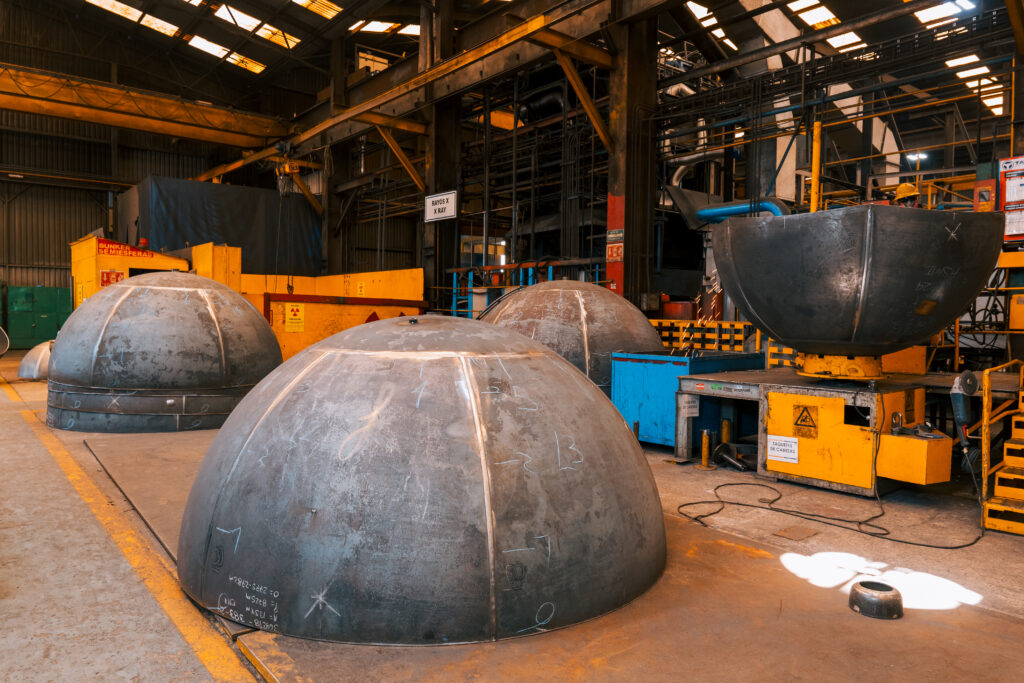
Hot forming refers to the process of shaping steel components heads, shells, and fittings at elevated temperatures, above the material’s recrystallization temperature. Hot forming produces components with consistent mechanical properties throughout, eliminates residual stresses introduced during cold forming, and is required by ASME for certain component geometries and material grades.
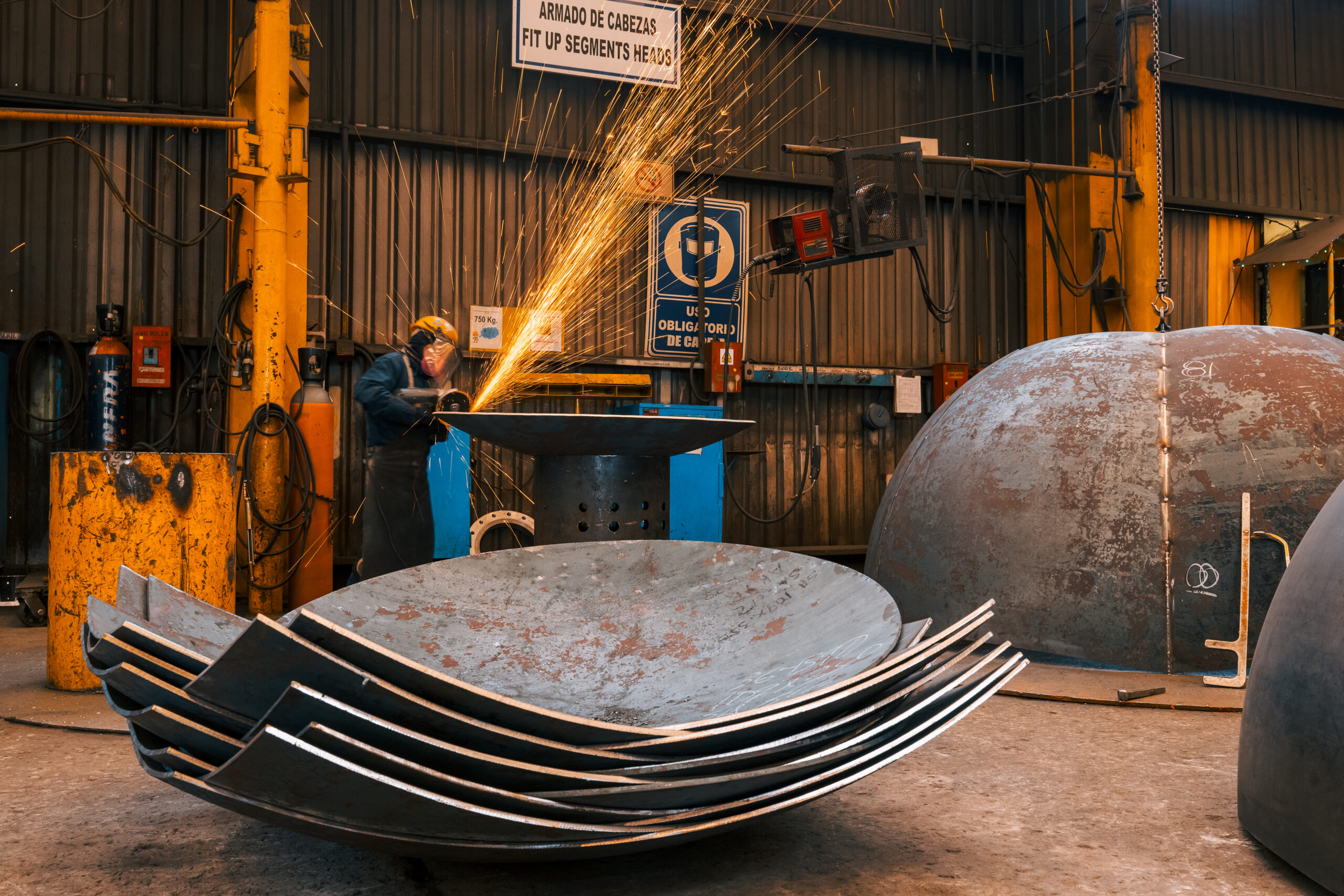
TRIARC Tank’s fabrication facilities in Mexico include hot-forming capabilities that allow us to produce pressure vessel heads and shells to exact ASME-specified dimensional tolerances. Every steel plate used in our vessels is sourced from U.S. steel mills, ensuring material quality, full traceability, and compliance with ASME mill certification requirements. Unlike manufacturers that outsource head forming, our in-house process gives us full quality control at every stage of fabrication.
High-Strength Low-Alloy (HSLA) Steel in High-Pressure Applications
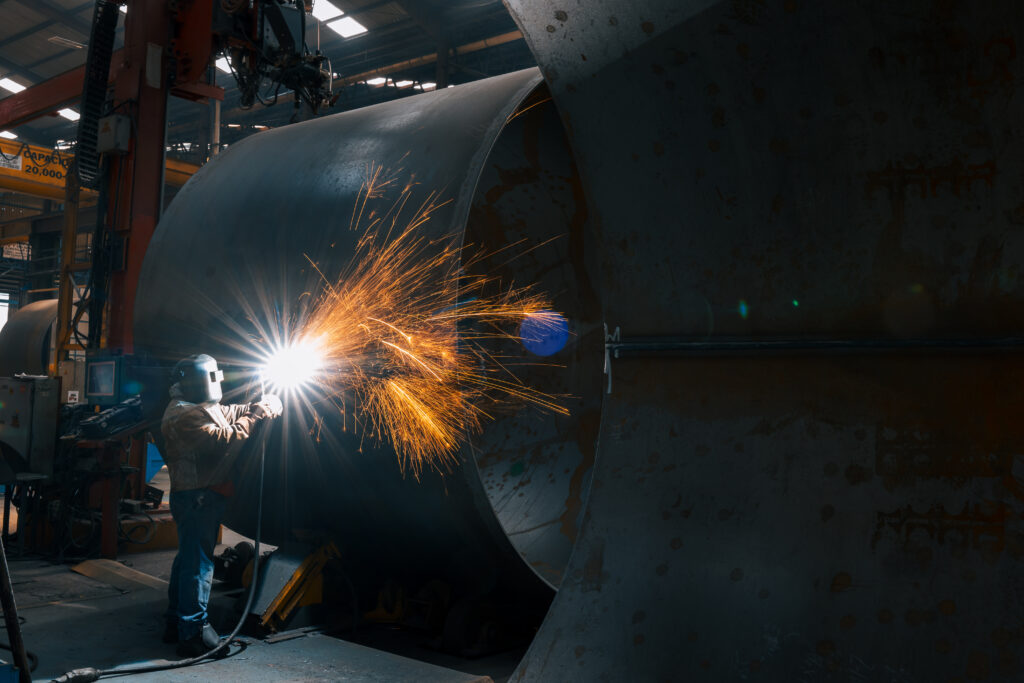
For vessels operating at higher pressures or where weight reduction is a design priority particularly under ASME Section VIII Division 2 high-strength low-alloy steels provide greater yield strength with reduced wall thickness. SA-537 Class 1 and Class 2 are examples of HSLA materials used in ASME pressure vessel construction where normalized fine-grain steel offers higher allowable stresses.
Stainless Steel and Special Alloys for Corrosive Service
Certain stored substances require vessel materials beyond carbon steel. Wet chlorine service, chemical processing applications, and high-purity storage may require stainless steel or specialty alloy vessels. TRIARC Tank’s engineering team evaluates material compatibility for every application, ensuring that the vessel material is chemically compatible with the stored substance across the full expected temperature range.
Material Traceability: ASME’s Chain-of-Custody Requirements
ASME Section VIII requires that all pressure-bearing materials in a certified vessel be fully traceable from mill certification through cut record to the finished vessel’s Manufacturer’s Data Report (Form U-1). TRIARC Tank maintains rigorous material traceability documentation as a standard operating practice. Because we source all steel from U.S. mills, every vessel we deliver is supported by a complete ASME-compliant audit trail from the American steel mill certification through our Mexican fabrication facility to the finished vessel’s Manufacturer’s Data Report.
Choosing the Right Steel for Your Application
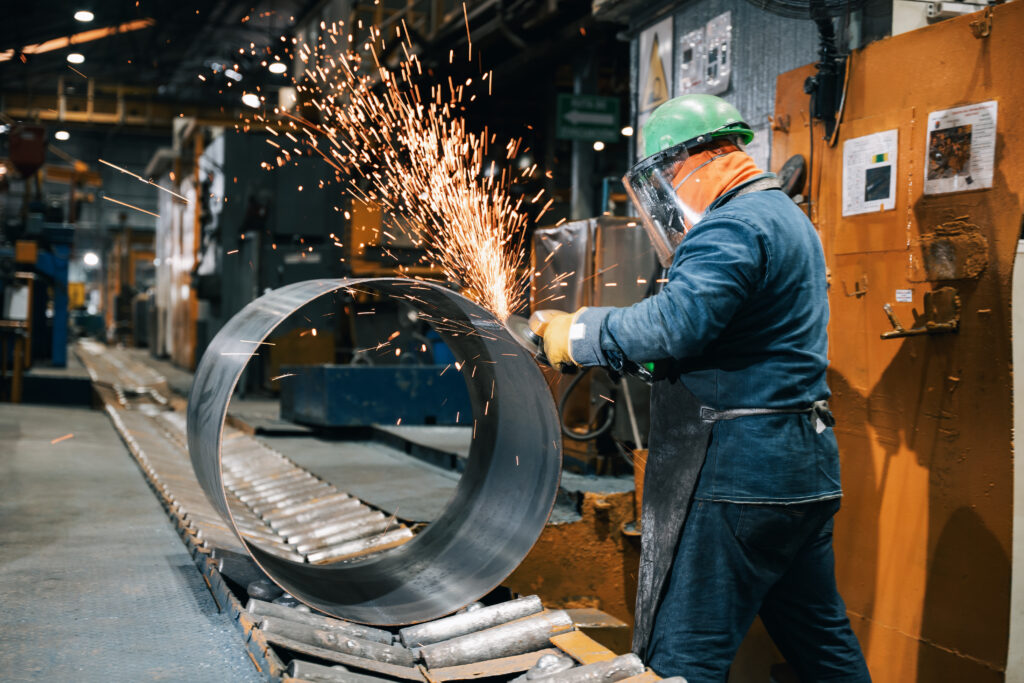
The optimal steel for your pressure vessel depends on stored substance, operating pressure, operating temperature range (including minimum ambient temperature), vessel geometry, and the ASME division under which the vessel is designed. TRIARC Tank’s engineering team is available to review your specific application requirements and recommend the appropriate material specification for your next vessel.